
They are dismantling the architecture of women’s and children’s health one nameable instrument at a time — and counting on you not to see any single one of them.
Every Friday — from now until the midterms — one receipt lands. Not a newsletter, not a hot take, not a doomscroll. A short, single-mechanism dispatch, built the same way every time.
The bill, the rule, the doctrine, the memo. The specific mechanism, by its real name — not the headline gloss.
The body where the law is applied. The speed of sepsis, the delayed transfer, the chart that becomes a subpoena.
None of this is new. It is borrowed, usually from the Fugitive Slave Acts. Naming the lineage is the diagnosis.
Numbers. Sources. The clinical-intelligence corpus behind The Architecture of Harm. We kept the data the federal government deleted.
A plain physician’s read of the mechanism: what it’s engineered to do, who pays, who benefits.
A specific, concrete action. Call your senator. Get the document. Forward this to one person who thinks none of it touches them.
Read the receipts in sequence and one source keeps surfacing — the Fugitive Slave Acts of 1793 and 1850, the original American machine for reaching across a state line to recapture a person. They did not invent any of this. They rebuilt it. This time, the thing being recaptured is a medical decision.
The Fugitive Slave Act of 1793 built the federal machine for reaching across state lines: the bounty paid to a stranger who suffered no injury, the extradition demand a governor could not easily refuse, the warrant good in any state. Every subsequent recapture statute is a remix.
The 1850 expansion added enforcement: federal commissioners, fines for officials who refused to comply, no jury, no testimony from the accused. The cruelty was not a side effect — it was the design. Read Texas HB 7 and Louisiana’s extradition front in that key.
A privacy rule vacated in a Texas courtroom. A bounty statute. An extradition request. A single word removed from a grant application. Each one defensible on its own terms. Together: the most consequential rollback of bodily and medical autonomy in modern American history. Every receipt names the borrowed part.
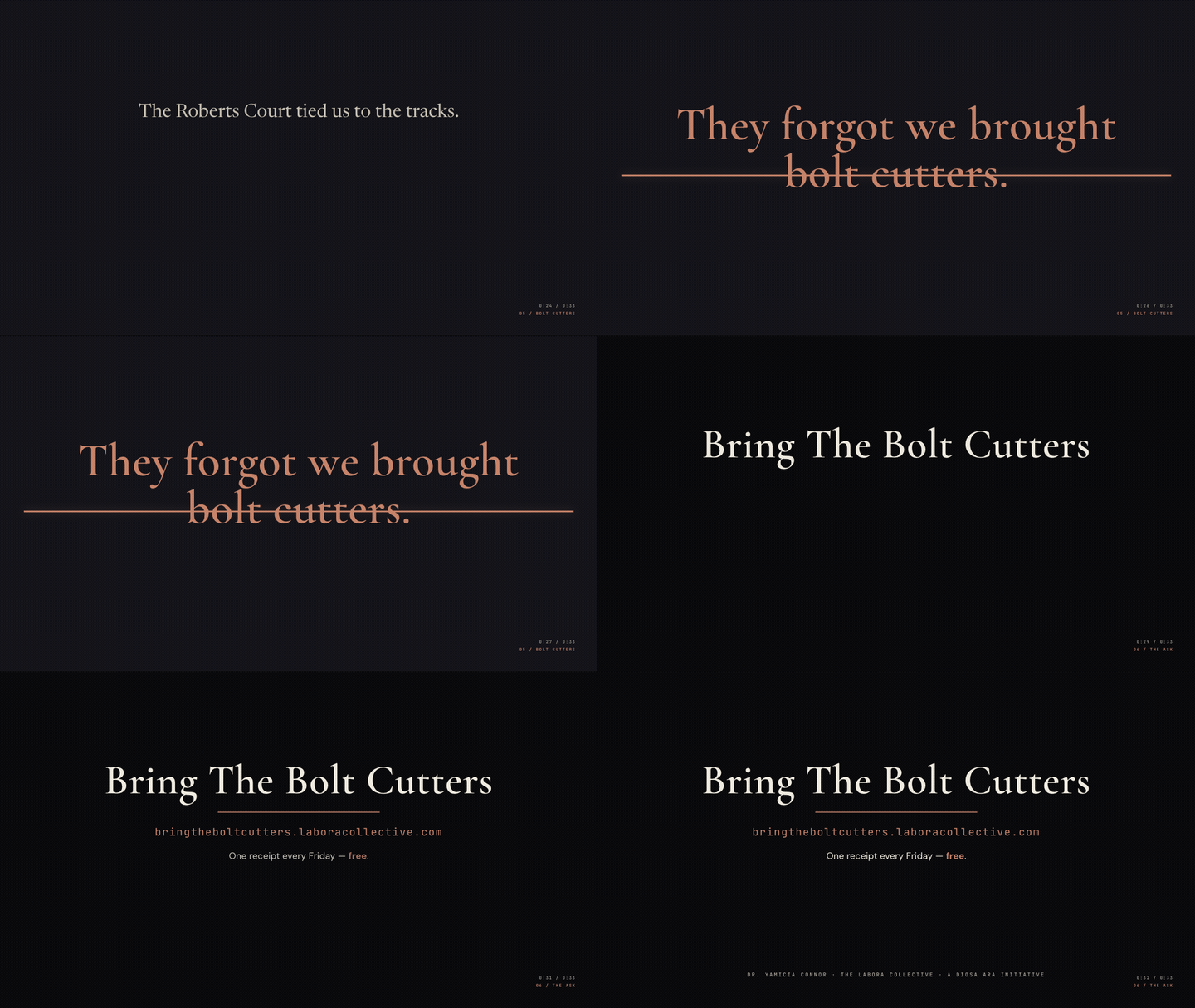
“The Roberts Court tied us to the tracks. They forgot we brought bolt cutters.”
The campaign opened with the SAVE Act — defeated in the Senate 48–50 on June 4, two votes short of law. Receipts #02–05 continue: the bounty state, the extradition front, the HIPAA rule that died in Texas court. One mechanism per week, by name.
The bill that would have made the 19th Amendment unenforceable for 69 million married women — without ever touching the Constitution. The Senate said no by two votes.
The single-word edits across HHS, CDC, and HRSA grant language — and what disappears when a category cannot be measured.
The $10,000-per-violation enforcement militia: who collects, who is hunted, and which 19th-century statute it was copied from.
Why a governor cannot easily refuse a warrant for a medical decision made in another state — and what that breaks.
A single Texas vacatur, a federal privacy floor torn out, and the chart that now travels across the state line on its own.
One mechanism. Every Friday. Until the midterms.
See the full schedule →One mechanism. One action. No spiral. Then forward it to one person who thinks none of this touches them.
Members fund physician-led, independent journalism — no pharma sponsors, no system editorial control. Join direct: no app-store markup.